Applying for a renovation permit in Canada is a municipal process, which means the specific steps, fees, and timelines vary depending on where a property is located. That said, the general framework is consistent across most Canadian cities and towns. This article walks through the typical permit process from start to finish, with notes on where regional differences commonly arise.
Does your renovation require a permit?
The first question to settle is whether the planned work actually requires a permit. Many homeowners assume that cosmetic updates — paint, flooring, cabinet replacements — require permits, while structural changes obviously do. The reality is more nuanced.
Work that typically requires a permit
- Structural modifications, including removing or altering load-bearing walls
- New electrical circuits, panel upgrades, or subpanel installations
- Plumbing additions, relocations, or replacements of drain lines
- Adding a bedroom, bathroom, or enclosed space that increases gross floor area
- Deck construction above a certain height threshold (typically 600mm from grade in Ontario)
- Basement development or secondary suite conversions
- New windows or doors that change the size or location of the rough opening
- Changing a home's exterior cladding in heritage zones
- HVAC equipment replacement or ductwork modifications in some municipalities
Work that typically does not require a permit
- Interior painting and wallpaper
- Flooring replacement (tile, hardwood, laminate) where no structural changes occur
- Cabinet and countertop replacement without plumbing or electrical changes
- Like-for-like fixture replacements (same location, same capacity)
- Fencing under municipal height limits
- Detached accessory structures under a certain size (thresholds vary widely)
When in doubt, contact the building department at your local municipality. Most offer a pre-application consultation, either in person, by phone, or through an online portal. Describing the scope of work to a permit clerk takes fifteen minutes and eliminates the risk of unpermitted work.
Step 1 — Prepare your drawings and documentation
Permit applications require drawings that describe the proposed work. The level of detail required depends on the complexity of the project. A deck addition may only require a site plan and a simple structural sketch. A basement suite conversion will likely require floor plans, ceiling height documentation, and details showing egress window compliance.
In larger cities like Toronto, Vancouver, and Calgary, permits for significant structural modifications require drawings stamped by a licensed professional engineer or registered architect. For smaller municipalities and simpler projects, owner-drawn plans prepared to scale are often accepted.
Drawings submitted for a permit typically include:
- Site plan showing property boundaries, setbacks, and the location of the proposed work relative to existing structures
- Floor plans of affected areas showing dimensions, room labels, and proposed changes
- Elevation drawings for exterior modifications, additions, and decks
- Structural details such as beam sizing, footing dimensions, and point load paths
- Electrical or plumbing schematics if those trades are involved
Step 2 — Submit the permit application
Most municipalities now accept permit applications online. Some smaller communities still require in-person submission at the building department counter. Regardless of submission method, the application will include:
- Completed application form with property address, applicant contact information, and a description of the work
- Drawings and specifications as described above
- Owner authorization if the applicant is a contractor rather than the homeowner
- Permit fees, which are typically based on the estimated value of construction
Permit fees in Canada range considerably. A straightforward deck permit in a small Ontario municipality might cost $150 to $300. A basement suite in Vancouver can generate permit fees of $3,000 to $6,000 depending on the estimated construction value. Fee schedules are published on each municipality's website and updated annually.
Step 3 — Wait for plan review
After submission, the building department reviews the drawings for compliance with the applicable building code — either the provincial building code or, in the case of certain smaller jurisdictions, a municipal adoption of the National Building Code.
Review timelines vary significantly. Simple permits in smaller municipalities are sometimes approved in two to three business days. Complex additions in major urban centres can take four to eight weeks, or longer during busy construction seasons. Some cities offer expedited review for an additional fee.
During review, the permit office may issue a deficiency notice requesting additional information or corrections to the drawings. Responding promptly to these requests keeps the review on track.
Step 4 — Permit issuance and construction
Once the permit is approved, a permit card or digital confirmation is issued. This document must be posted on-site in a visible location throughout construction. In practice, this is commonly taped to a front window or attached to temporary site hoarding.
Work can begin once the permit is in hand. The building code does not generally allow construction to begin before permit issuance, even if approval appears imminent. Starting work without a permit exposes the property owner to stop-work orders, fines, and requirements to uncover or remove completed work for inspection.
Step 5 — Inspections during construction
Inspections are a required part of the permit process. The building permit will specify which inspections are required and at what stage they must be called. Missing a required inspection can result in a requirement to expose the work — for instance, removing drywall to allow inspection of the framing and insulation behind it.
Common inspection stages include:
- Footing or foundation inspection — before concrete is poured for new footings
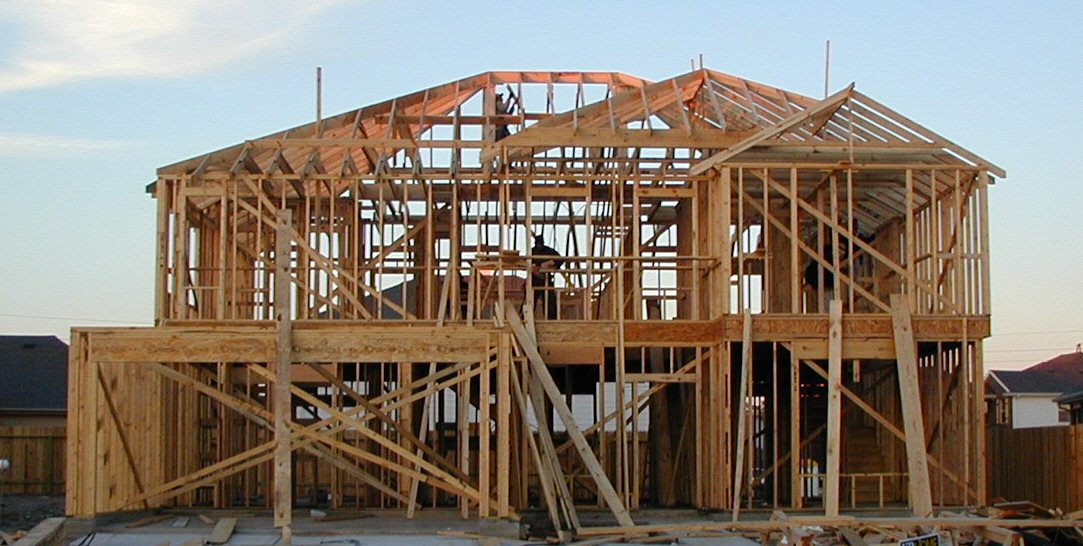
- Rough framing inspection — after framing, blocking, and structural elements are complete but before insulation and drywall begin
- Rough electrical inspection — wiring roughed in before walls are closed
- Rough plumbing inspection — drain and supply lines before they are concealed
- Insulation inspection — in some jurisdictions, required before drywall is applied
- Final inspection — all work complete; the inspector confirms compliance and signs off on the permit
Inspections are requested by calling the building department or, increasingly, through an online scheduling portal. Most jurisdictions require 24 to 48 hours advance notice for an inspection appointment. Inspectors typically work within established time windows rather than at exact appointment times.
Step 6 — Final occupancy or completion sign-off
Once all inspections pass, the building department issues a final completion notice or occupancy permit (for projects that involve a new dwelling unit, such as a secondary suite). This document confirms that the work was completed in compliance with the approved drawings and the applicable building code.
Keep this documentation with the property's records. It is commonly requested during real estate transactions and is evidence that permitted renovation work was properly inspected and approved.
What happens if you renovate without a permit?
Municipalities have authority to issue stop-work orders, impose fines, and require the demolition or remediation of unpermitted work. Property owners who sell homes with undisclosed unpermitted work may face legal exposure if the buyer discovers the work after closing.
Retroactive permits — sometimes called "as-built" permits — are available in some municipalities for work already completed without a permit. The process typically requires an application, drawings reflecting the as-built condition, and inspections that may require opening walls or exposing structure. Fees are sometimes doubled for retroactive applications.
Note: Permit requirements, fees, and inspection stages vary by municipality and change over time. Verify current requirements with your local building department before beginning any renovation project. This article reflects general practice across Canadian jurisdictions as of May 2026.