When a building permit is issued for a residential renovation, the permit document specifies which inspections are required and at what stage they must be called. Inspections are not optional — they are a condition of the permit, and passing each required inspection is what results in the final permit sign-off.
Many homeowners, particularly those undertaking a first significant renovation, have limited familiarity with how inspection processes work in practice. Understanding what happens at each inspection stage reduces delays and helps ensure the project moves through the permit process smoothly.
Who conducts renovation inspections?
Municipal building inspectors are employed by or under contract to local building departments. In Canada, building inspectors must meet provincial qualification standards. In Ontario, for instance, inspectors are required to hold a Building Code Identification Number (BCIN) for the categories of work they inspect. In BC, inspectors are certified under the provincial Safety Authority framework for some categories of work.
Inspectors review completed work against the approved drawings and applicable building code. They are not responsible for project management, scheduling trades, or resolving disputes between the homeowner and contractor. Their role is to verify code compliance at the point of inspection.
How to book an inspection
Most municipalities require advance notice before an inspection visit, typically 24 to 48 hours. The method for booking varies:
- Online permit portals (increasingly common in Ontario, BC, and Alberta) allow inspection requests through the same system used to submit the permit application
- Phone booking through the building department is available in most municipalities
- Some smaller communities still accept in-person requests at the building department counter
When booking, provide the permit number, the type of inspection required, and contact information for whoever will be on-site. Inspectors work within time windows (for example, morning inspections between 9 AM and 12 PM) rather than at precise appointment times. Someone must be present on-site or available to provide access when the inspector arrives.
Inspection stages for common residential renovations
Footing and foundation inspection
Required before concrete is placed for new footings or foundation walls. The inspector verifies:
- Footing depth meets the frost depth requirement for the local climate zone
- Footing dimensions match the approved drawings
- Reinforcing steel (rebar) placement and cover comply with the structural specifications
- Soil conditions at footing depth are consistent with the assumptions in the drawings
This inspection is not required for projects that do not involve new foundations, such as interior-only renovations.
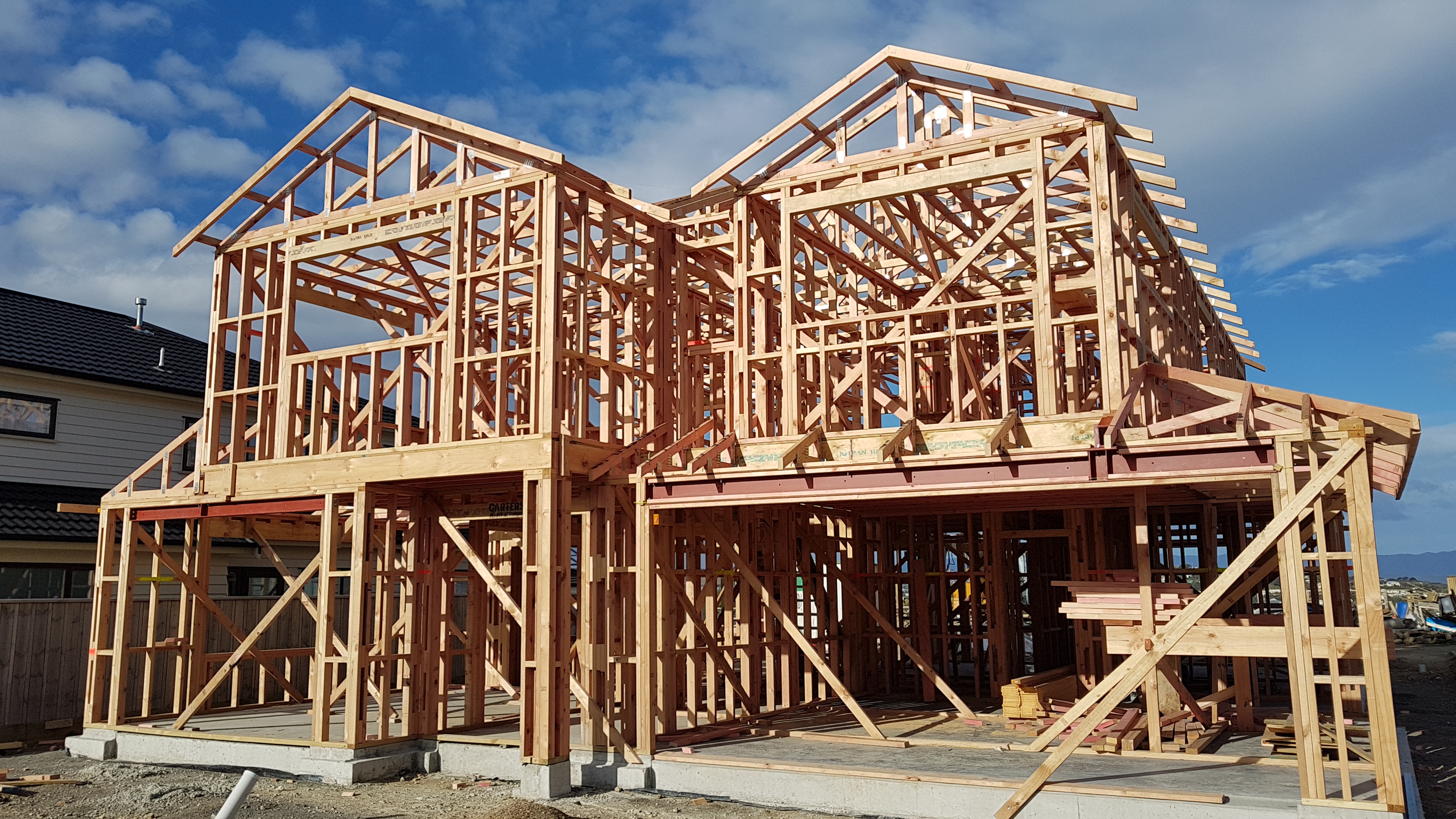
Rough framing inspection
Occurs after structural framing is complete — all walls, floors, and roof members in place — but before insulation and drywall begin. This is one of the most consequential inspections because it is the last opportunity to verify structural compliance before the work is concealed.
The framing inspector typically checks:
- Structural member sizes, spans, and connections match the approved drawings
- Load-bearing wall locations are consistent with the structural plan
- Beam bearing conditions are adequate at posts and wall supports
- Fire blocking is installed at required locations (floor-wall junctions, within wall cavities at each storey, around penetrations)
- Stair geometry — riser height, tread depth, headroom — complies with Part 9 requirements
- Egress requirements for bedrooms (window opening size, dimensions, and height from floor) are met
- Nailing schedules and hold-down specifications are met where noted on drawings
Rough electrical inspection
Conducted after electrical wiring is roughed in but before walls are closed. In many provinces, rough electrical inspections are conducted by provincial electrical safety authorities rather than municipal building inspectors. In Ontario, the Electrical Safety Authority (ESA) handles electrical inspections. In BC, BC Safety Authority (Technical Safety BC) oversees electrical. In Alberta, inspections are conducted by Safety Codes Officers who may be employed by municipalities or by authorized private safety codes agencies.
The inspector at a rough electrical inspection checks:
- Wire gauge and circuit protection sizing are appropriate for the loads served
- Cable protection and support intervals meet code requirements
- Box fill calculations — the number and size of conductors in each junction, switch, and outlet box
- Spacing of outlets along wall runs meets the Part 9 requirement that no point along a wall is more than 1.8 metres from an outlet
- GFCI protection is provided in required locations (bathrooms, kitchens within 1.5 metres of a sink, exterior, garages, unfinished basements)
- Arc-fault circuit interrupter (AFCI) protection where required by the current code edition
- Grounding and bonding
Rough plumbing inspection
Occurs after drain, waste, and vent (DWV) piping and supply lines are installed but before they are concealed in walls or floors. The plumbing inspector verifies:
- Drain pipe grades — minimum 2% (1/4 inch per foot) for horizontal drain runs
- Trap configurations — every fixture must be trapped, and traps must be vented to prevent siphoning
- Stack and vent sizing comply with the applicable code
- Water supply pipe sizing and material are appropriate
- Shut-off valves are installed at fixtures where required
- Pressure test or water test of the DWV system (methods vary by jurisdiction)
Insulation and vapour barrier inspection
Some jurisdictions require this as a distinct inspection stage before drywall is applied. The inspector confirms:
- Insulation type and R-value meet the prescriptive requirements for the climate zone
- Vapour barrier is continuous and properly lapped and sealed at penetrations
- Air barrier continuity at wall-to-ceiling and wall-to-floor junctions
In jurisdictions that have adopted higher energy performance requirements — such as Ontario's SB-12 compliance path or BC's Energy Step Code — documentation of energy compliance must be in order before this inspection will pass.
Final inspection
The final inspection occurs when all work is complete. The inspector conducts a comprehensive walk-through of the finished spaces and verifies:
- All required systems are complete and operational (electrical, plumbing, HVAC)
- Smoke alarms are installed and functional — locations must meet the current code requirements, which in most Canadian provinces require a smoke alarm on every storey including the basement, and inside or outside each sleeping area
- Carbon monoxide alarms are installed where required (in proximity to attached garages and on floors containing fuel-burning appliances)
- Handrail dimensions, height, and graspability comply with code
- Guardrail heights on decks, stairs, and balconies are code-compliant
- Exterior drainage and grading direct water away from the building
- All work matches the approved drawings or approved revisions
If the inspection does not pass
When an inspection identifies deficiencies, the inspector issues a written notice describing each item that must be corrected. This is not a stop-work order in most cases — work in other areas can typically continue while deficiencies are addressed. Once corrections are made, a re-inspection must be booked.
Re-inspection fees apply in most municipalities after a first failed inspection attempt. Multiple failed inspections on the same item can indicate a more significant code compliance issue and may prompt a more detailed review of the project by the building department.
Common reasons inspections are delayed or failed
- Work is covered before the required inspection is called — the most common issue at rough framing and rough trades stages
- Permit drawings are not available on-site for the inspector to reference
- Work deviates from approved drawings without a permit revision being submitted and approved
- Fire blocking is missed at required locations in framing
- Egress window sizes do not meet minimum opening requirements
- Smoke or CO alarm placement does not meet current code (older homes often have alarms from a previous installation that no longer meet current requirements)
Record-keeping after inspections
Keep copies of all inspection records, including the permit card, inspection reports, and the final sign-off. These become part of the property's building record. When selling a property, disclosure of permits and the availability of inspection records provides evidence that the work was completed to code — a material point in real estate transactions in Canada.
Note: Inspection requirements, staging, and booking procedures vary by municipality. Consult your local building department for the specific inspection requirements attached to your permit. This article reflects general practice across Canadian jurisdictions as of May 2026.